Retiring in Europe Now: Risky or Right Amid Wife's Concerns?
 Emma Taylor- I am a passionate personal finance blogger dedicated to helping individuals take control of their financial well-being.
A Couple's Dilemma: Retiring in Europe Amid Uncertainty A reader poses a pressing question: He and his spouse are prepared to retire in Europe, yet she hesitates due to the ongoing political and economic instability. He is eager to proceed immediately. Who holds the stronger position in this debate?

A Couple's Dilemma: Retiring in Europe Amid Uncertainty
A reader poses a pressing question: He and his spouse are prepared to retire in Europe, yet she hesitates due to the ongoing political and economic instability. He is eager to proceed immediately. Who holds the stronger position in this debate?
While some retirees envision spending their golden years in the familiar communities where they raised families and built careers, others dream of leaving the United States behind for an overseas adventure. By the end of 2024, over 170,000 retired U.S. workers were collecting Social Security payments across Europe. A recent Harris Poll revealed that 51% of baby boomers could envision relocating to Western Europe, with 52% of all Americans believing they could achieve a superior quality of life abroad.
Perhaps you and your wife originally mapped out your European move as part of your retirement strategy. If today's volatile political and economic landscape has one of you second-guessing that vision, such doubts are entirely reasonable. Let's explore the key factors to weigh if you're divided on this decision.
Europe Stays a Top Choice for American Retirees
In an era marked by domestic turmoil and division in the U.S., a growing number of Americans are contemplating leaving it all behind. Europe consistently ranks as a favored destination for those seeking a fresh start.
Robert Levitt, founder of Levitt Capital Management based in France, specializes in guiding Americans through the financial intricacies of relocating to and thriving in Europe. He observes, "The latest political and economic developments have actually spurred more Americans to head to Europe. Our firm has never experienced such high demand."
Levitt attributes this surge primarily to disparities in living costs and political climates. "Americans are increasingly motivated to escape the deep divisions plaguing their country and even straining family ties," he notes. "In Europe, political matters haven't infiltrated everyday life to the same intense degree."
Furthermore, Levitt highlights that the timing is advantageous for relocation. Not only are Americans generally welcomed, but the U.S. dollar maintains significant strength, and real estate remains affordably priced in many areas.
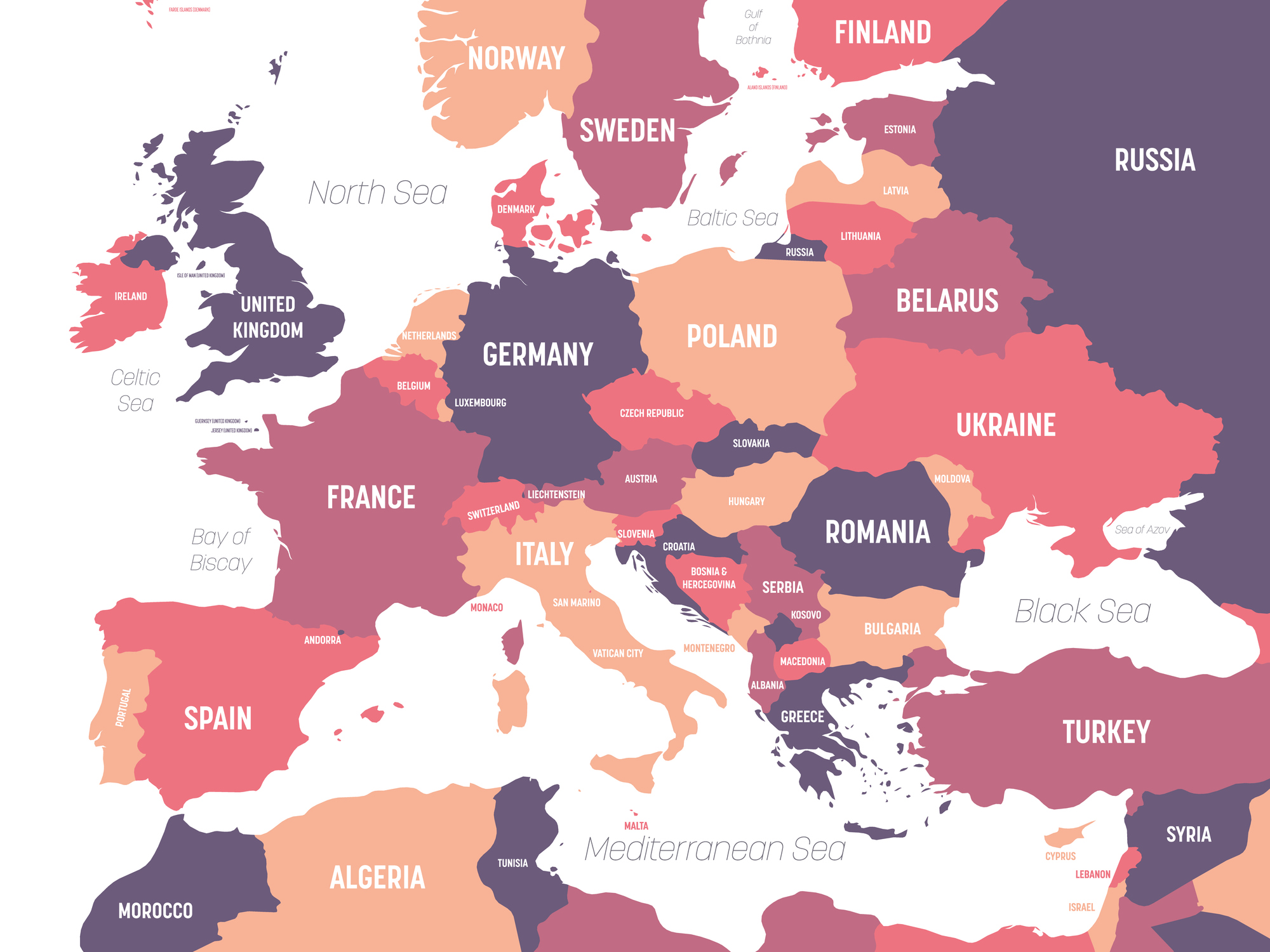
Geopolitical Risks Cannot Be Ignored
Although Europe continues to attract American retirees, your wife's apprehensions about security are well-founded, particularly with shifting U.S. stances on alliances like NATO.
The prolonged conflict between Ukraine and Russia has heightened anxiety among Europeans in NATO nations. For context, the roughly 1,280-mile span from Athens, Greece, to Ukraine's Donetsk region equates to about half the continental U.S. distance from Washington, D.C., to San Francisco. Should Ukraine falter, "European defense capabilities would face their sternest test since the Soviet Union's dissolution," warns the Eurasia Group in their analysis.
A February European Union poll indicated that two-thirds of Europeans perceive their nation as "under threat." The sharpest worries appeared in France (80%), the Netherlands and Denmark (77%), and Cyprus and Germany (75%). Positively, a majority still trust their country's defensive prowess, with Luxembourg (76%), Portugal (74%), Cyprus (73%), and Lithuania (71%) showing the highest confidence levels.
Economically, the outlook brightens considerably. Numerous European nations are on the cusp of accelerated expansion following periods of sluggish growth and underinvestment, per a recent EY Report. That said, an extended war involving Iran might dampen GDP and fuel inflation—challenges that equally threaten the U.S. and Europe.

Confronting Tax and Financial Concerns Directly
If your wife's reluctance persists despite prior enthusiasm for Europe, thorough due diligence on expenses, hurdles, advantages, and drawbacks could ease her mind.
Federica Grazi, Founder and Managing Director of Mitos Relocation Solutions, frequently assists Americans in evaluating European destinations. She affirms that financial upsides are achievable, but meticulous planning is essential. "Many European countries impose relatively steep taxes," she advises. Nonetheless, select nations provide tailored incentives for incoming retirees.
Grazi elaborates, "Greece, for instance, levies a flat 7% tax on foreign income for 15 years. Italy matches this for 10 years in designated southern areas. Cyprus excels further, applying just 5% to foreign pensions indefinitely and waiving taxes on foreign dividends and interest for 17 years."
She stresses evaluating living costs prior to selection. "Europe is broadly more affordable than the U.S., but differences abound by region and locality," Grazi explains. "Housing and groceries aside, scrutinize health care expenses closely, as they can substantially sway your budget in certain places."
Currency fluctuations represent another subtle pitfall. "I advise strategic diversification of holdings across currencies," she recommends, "to shield against abrupt dollar swings eroding your purchasing power over time."
Test the Waters with a Trial Stay
Europe offers compelling draws—lower costs, rich culture, storied past, and stunning landscapes. Yet, prior to full commitment, immersing yourselves extendedly without permanence makes sense.
Scott Stratton, CFP, CFA, and President of Good Life Wealth Management, relocated to Paris three years back. He endorses trial periods for prospective European retirees. "I urge anyone eyeing Europe to undertake multiple exploratory visits, lasting one or two months each, to various spots for a true sense of daily existence," Stratton suggests. "Upon deciding to proceed, opt for renting initially, allowing flexibility to return stateside within a year or two if needed."
As he elaborates, "Long-term expats in Europe often struggle to integrate into communities. Tourist havens can turn isolating for residents."
Thus, leasing for at least 12 months helps confirm suitability before divesting U.S. property and buying abroad. Stratton also flags emotional distances: "Proximity to children, grandchildren, and friends might breed growing discontent."
Should Europe become home, preserving U.S. financial connections is vital—think retirement portfolios and Social Security. Grazi reiterates tax homework, while Stratton flags extras: "Income taxes may be navigable, but probe inheritance levies, estate strategies, and capital gains. Some nations hit 45% inheritance rates on modest multimillion-dollar estates."
Easing Fears Through Awareness and Connections
Your wife's worries aren't unfounded; Grazi notes rising European vigilance on politics, though outright alarm is absent. "High-alert incidents occur, like recent drone activity in Cyprus, but global responses are swift," she says. "Local acquaintances dismiss fears of intra-European escalation."
Stratton concurs: "Russians advancing post-Ukraine and perceived U.S. NATO pullbacks trouble many Europeans." Still, safety perceptions remain solid. "Violent crime rates are far lower, mass shootings rare, and police brutality minimal. U.S. expats feel safer abroad than visiting home."
Levitt finds clients prioritizing investments over peril. To reassure your wife, engaging current European expats via forums could provide grounded insights into realities on the ground.
Ultimately, Stratton reflects, "Retirement alone transforms life; adding transatlantic upheaval amplifies it." Empower her with resources to build confidence before leaping.
Weekly Digest
Top articles delivered to your inbox every week.