Valuing Your Collectibles: Expert Tips to Assess and Safeguard
 Emma Taylor- I am a passionate personal finance blogger dedicated to helping individuals take control of their financial well-being.
This exceptional 1913 Liberty Head Nickel fetched an astonishing $4.5 million at auction in 2018. Kathryn McMiller and her brothers and sisters received a substantial inheritance from their late parents, encompassing numerous collections such as coins, postage stamps, an assortment of fly swatters,
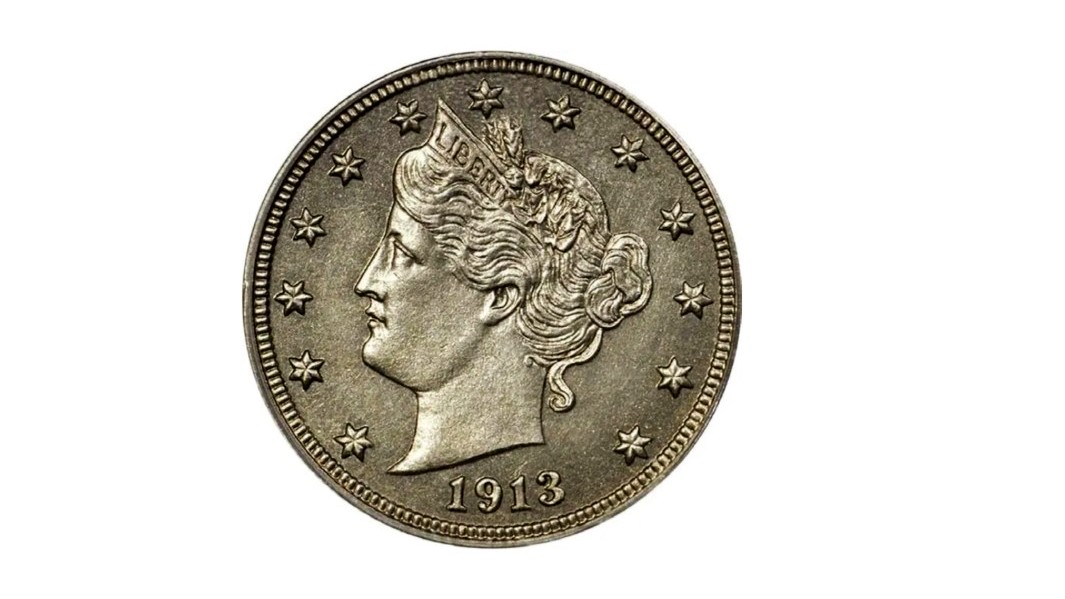
This exceptional 1913 Liberty Head Nickel fetched an astonishing $4.5 million at auction in 2018.
Kathryn McMiller and her brothers and sisters received a substantial inheritance from their late parents, encompassing numerous collections such as coins, postage stamps, an assortment of fly swatters, and over 400 antique toothpick holders. Some of these possessions might possess considerable monetary worth, yet figuring out their precise value and deciding on the best way to liquidate or manage them has proven to be a prolonged and tedious process spanning several years.
“I really wish they had cleared out all this clutter much earlier,” remarks McMiller, who is now retired after a career specializing in health information management.
For followers of the renowned Japanese organization expert Marie Kondo, parting ways with cherished collections might seem straightforward. However, countless individuals, particularly as they age, discover that their treasures continue to bring them joy, making them hesitant to let go. To simplify matters for their beneficiaries, collectors ought to implement proactive measures today to prevent the possibility of valuable family heirlooms being discarded at thrift stores or ending up in waste disposal sites.
The initial action involves careful curation: sift through your items and sell or donate those lacking deep sentimental attachment. Next, compile a comprehensive inventory of the pieces you intend to retain. Store duplicates of this list both digitally and in physical form. Ensure your heirs are aware of their locations and can interpret any notations or abbreviations you've used.
This detailed inventory ought to feature precise descriptions for every single item, along with, if feasible, records of your original purchase price and a current market value assessment. The worth of many collectibles fluctuates dramatically based on factors like their physical condition and provenance. For example, a pristine original pressing of the Beatles' 1966 album “Revolver” could command several hundred dollars on the market, whereas a 2022 reprint might retail for roughly $20.
Should you suspect your assemblage might be valued at tens of thousands of dollars, it's prudent to engage an attorney to verify that it is accurately documented and incorporated into your will or trust, recommends Amber D. Hughes, an attorney based in the Phoenix office of Dickinson Wright. This precaution can help avert familial disputes and associated legal expenses. Note that stipulations differ across various states.
Furthermore, any collection of notable value warrants proper insurance coverage. The appraisal obtained for insurance purposes offers a general sense of the collection's worth, though it frequently inflates the figure compared to what it might realistically achieve at auction, according to Jennifer Jones, a senior director at Phillips Auctioneers.
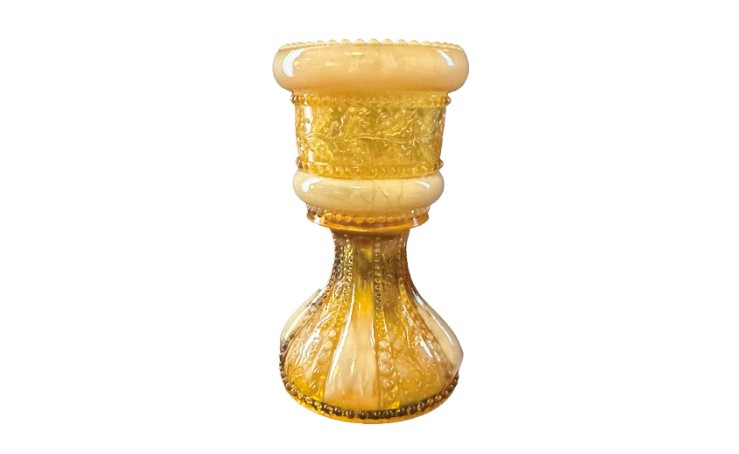
Extraordinary toothpick holders such as this one, crafted in 1903 by the Indiana Tumbler & Goblet Works, have commanded auction prices as high as $15,000.
Your successors will probably opt to sell portions of your collection, so equip them with guidance on obtaining professional valuations and executing sales. Uninformed sellers often receive minimal offers from dealers who exploit their lack of knowledge. Conversely, those harboring inflated expectations can deter prospective purchasers.
Share the contacts of reliable specialists you've vetted, such as dealers, auctioneers, and fellow enthusiasts. Additionally, note the most dependable published resources for pricing data specific to your area of collecting.
An alternative approach is to identify a suitable institution interested in accepting your collection as a charitable donation upon your passing. For instance, Michael Melnick, a dentist practicing in Pittsburgh, has made arrangements to donate his collection of approximately 600 elephant figurines to the Elephant Sanctuary located in Hohenwald, Tennessee.
Antiques
Seek out collector communities dedicated to your specific interest, as they can offer invaluable insights into current market values and effective selling strategies. Indeed, organizations like the National Toothpick Holder Collectors' Society exist for niche pursuits. Judy Knauer, the society's founder, notes that a particularly scarce example sold for $13,500 in the previous year, although the majority hold minimal or no significant value.
Experts in antiques and dealers observe that overall prices have trended downward recently, coinciding with diminished interest from younger generations in items like 19th-century wardrobes or armoires. On the other hand, the market for luxury antique timepieces remains exceptionally robust, as highlighted by Jones from Phillips.
Occasionally, seemingly ordinary objects harbor unexpected treasure. Consider Lois Jurgens from Holdrege, Nebraska, who consigned an aged crock to an auction house in January, anticipating perhaps $100. Astonishingly, it realized $32,000. Auctioneer Ken Bramer explains that it was an exceedingly rare piece originating from Red Wing, Minnesota, highly coveted by aficionados.
Art
Reputable auction houses are typically willing to examine your paintings or other artistic works and provide an informal valuation estimate, according to Todd Imhof, a partner at Heritage Auctions in Dallas. Formal appraisals, such as those required for estate settlements, incur fees.
Subscription services like Artnet maintain extensive databases of past auction outcomes. It's crucial to preserve meticulous documentation, including purchase prices, prior ownership history, and details on authentication, restoration, or re-framing.
Books
Antiquity alone does not guarantee value. For example, antique Bibles are plentiful. “Bibles dating from the 18th century onward are seldom of great worth,” advises Alexander Akin, a partner at Bolerium Books and current president of the Antiquarian Booksellers' Association of America (ABAA).
This principle applies similarly to ancient volumes addressing forgotten religious debates or subjects of waning relevance today.
Encyclopedias, Reader's Digest abridged editions, or any volumes that are stained or damaged are challenging to offload, often fetching little interest. Book club editions generally command far less than true first editions distributed via independent bookstores. However, provenance linking a book to a notable figure can elevate even commonplace titles to premium status.
Esteemed references include "Collected Books: The Guide to Values" and "First Editions: A Guide to Identification." Digital platforms like viaLibri and Biblio serve as reliable online hubs. The ABAA site's FAQ section delivers a solid primer on appraising and marketing books.
Coins
Doug Mudd, director of the American Numismatic Association's Money Museum in Colorado Springs, Colorado, fields inquiries daily from individuals wondering if their aged coin represents a windfall. “In about 80% of cases, it's not particularly valuable,” he notes, yet encourages everyone to investigate.
Those accumulated jars of international coins from past travels? They typically hold negligible value unless composed of precious metals due to their age or possess rarity appealing to dedicated numismatists.
Local dealers might accept them for distribution as promotional giveaways to young enthusiasts. For American coinage, Whitman Publishing's "The Official Red Book" offers a reliable benchmark for valuations, per Mudd. The association's site features a vetted directory of reputable dealers.
Sports Cards
Specialized auctioneers like Lelands and Heritage handle sports cards and memorabilia, providing complimentary preliminary assessments. They generally bypass consignments projected to yield merely a few hundred dollars.
Pre-1970 baseball cards, particularly vintage rookie cards of future legends, rank among the prize possessions—the earlier, the better.
Resources such as Beckett Media and Card Ladder furnish pricing intelligence. Services like Forensic Card Grading and PSA from Collectors Holdings Inc. evaluate condition, which profoundly influences worth.
Stamps
The Scott Standard Postage Stamp Catalogue, accessible in numerous libraries, supplies a baseline valuation, according to Ken Martin, a stamp authentication specialist with the American Philatelic Society.
He emphasizes that minute variations in size, printing techniques, or paper can drastically alter a stamp's desirability—details often imperceptible without expert scrutiny. Rely on vetted philatelists or merchants. Sites like Robert A. Siegel Auction Galleries document real-world auction realizations.
Vinyl Records
While vinyl has experienced a renaissance, only a fraction commands more than nominal sums. Dismiss hopes of profit from ubiquitous albums by artists like Ray Conniff or Barbra Streisand, which proliferate in storage spaces nationwide.
Premium demand persists for superior-condition classics from enduring icons in jazz, rock, soul, and blues genres. Lesser-known gems like Nick Drake's or Judee Sill's limited-run releases, overlooked in their era, now fetch hundreds or thousands. Specialized sites reveal listing prices and often confirmed sales data.
Steve McClaning, a retired food wholesaler from Pittsburgh, recently streamlined his holdings amid downsizing, lacking enthusiastic heirs. He consigned nearly 1,000 records to his preferred local shop, Jerry's Records, averaging about $3.50 each—a equitable deal, roughly one-third of retail, in his view. He retained 50 cherished pieces, prominently displaying their covers in his home office, including Marvin Gaye's seminal “What's Going On.”
Weekly Digest
Top articles delivered to your inbox every week.